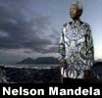
Mandela's wish for South Africa
11 May 2004
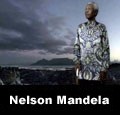
Nelson Mandela bade farewell to Parliament on Monday 10 May 2004 - 10 years to the day after he was sworn in as South Africa's first democratically elected President - urging South Africans never to forget their past, but to use it as a guide in overcoming the challenges still facing the country.
His wish, he said, was that South Africans "never give up on the belief in goodness".
"Let us never be unmindful of the terrible past from which we come", Mandela told a special sitting of Parliament in Cape Town. That memory, Mandela said, should be used "not as a means to keep us shackled to the past in a negative manner, but rather as a joyous reminder of how far we have come and how much we have achieved".
The country's history of division, injustice and suffering ought to "inspire us to celebrate our own demonstration of the capacity of human beings to progress, to go forward, to improve, to do better".
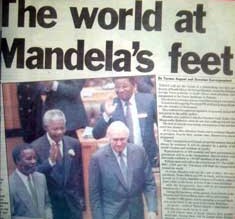
A decade ago, Mandela was installed as head of South Africa's government, with FW de Klerk and current President Thabo Mbeki as joint second-in-commands, during a decisive period that ultimately set the "rainbow nation" on its path to peaceful democratic rule.
On Monday, the same trio of Mandela, Mbeki and De Klerk unveiled a commemorative inscription at Parliament marking SA's historic path as well as celebrating 10 years of democracy.
A guiding principle in South Africa's search for a non-racial inclusive democracy, Mandela said, "has been that there are good men and women to be found in all groups and from all sectors of society; and that in an open and free society those South Africans will come together to jointly and co-operatively realise the common good".
In a cynical world, Mandela said, South Africa had become "an
inspiration to many. We signal that good can be achieved amongst human beings who are prepared to trust, prepared to believe in the goodness of people.
"Historical enemies succeeded in negotiating a peaceful transition from apartheid to democracy exactly because we were prepared to accept the inherent capacity for goodness in the other.
"My wish is that South Africans never give up on the belief in goodness, that they cherish that faith in human beings as a cornerstone of our democracy."
"Let us refrain from chauvinistic breast-beating", Mandela said. "But let also not underrate what we have achieved in establishing a stable and progressive democracy where we take freedoms seriously; in building national unity in spite of centuries of apartheid and colonial rule; in creating a culture in which we increasingly respect the dignity of all."
Mandela warned of the challenges still facing South Africa - in particular poverty, unemployment, and HIVAids - saying
that democracy "must bring its material fruits to all, particularly the poor, marginalised and vulnerable. Our belief in the common good ultimately translates in to a deep concern for those that suffer want and
deprivation of any kind."
Referring to himself as an "retired old pensioner", Mandela - uncharacteristically dressed in a suit - told the assembled MPs that he was grateful to have been elected to lead the country during its turbulent years.
"This old man ... notes with immense satisfaction and pride today the persistence and strengthening of that spirit of generosity, magnanimity and confident hopefulness about the future of our nation."
Mandela, who turns 86 on July 18, has indicated that he will be retiring from his active lifestyle, which continued even after he handed the presidential reins over to Thabo Mbeki in 1999.
Mandela also praised Mbeki, saying that no president or prime minister in South Africa's history could "claim to have done more
for the people and the country".
Mbeki, Mandela said, "a modest man and I know he would prefer that I do not sing his personal praises, but his achievement as President and national leader
is the embodiment of what our nation is capable of."
De Klerk, Mandela's predecessor as President and the man who took the bold step of releasing the ANC leader from prison, told the members of the legislature that 10 May was "the day of Nelson Mandela, of Madiba ... a man who towered out like a giant in this transformation, a man who has shown all of us what it means to really build reconciliation".
De Klerk, who retired from politics in 1997, praised all South Africans for their role in bringing about change in the country, asking them to join hands for further socio-economic transformation, saying the challenges were still huge. "We must ensure that South Africa becomes a winning nation."
Mandela left the chamber assisted by De Klerk, as the gathered MPs sang:
"Rolihlahla Mandela, freedom is in your hands, show us the way to freedom in this land of Africa".
SouthAfrica.info reporter
Nelson Mandela's final address to Parliament
Cape Town, Monday 10 May 2004
Madam Speaker, Mister President, Honourable Members
We are deeply moved and humbled by your magnanimous gesture in
inviting us to address this joint session of the two houses of parliament.
We are aware, Madam Speaker, that an exception to the standing rules
had to be made in order to allow a retired old pensioner, who is neither a
member of parliament nor the serving head of state of any country, to
address you.
We remember, Madam Speaker, that on this exact day ten years ago
democratic South Africa celebrated its ceremonial birth with the
inauguration of its first President and two Deputy Presidents.
We recall the joy and excitement of a nation that had found itself:
the collective
relief that we had stepped out of our restrictive past and the expectant
air of walking into a brighter future.
The national climate was one of magnanimity and a great generosity of
spirit. As a people we were enormously proud of what we had achieved,
negotiating amongst ourselves a peaceful resolution to what was
regarded as one of the most intractable situations of conflict in the
world.
We were not unaware of or blind to the extent, depth and gravity of the
challenges ahead of us as we set out on that day to transform,
reconstruct and develop our nation and our society.
However, the
overwhelming feelings in those early days of democratic nationhood
were of hope and confidence. We had miraculously – as many said –
transcended the deep divisions of our past to create a new inclusive
democratic order; we had confidence that as a nation we would similarly
confront and deal with the challenges of reconstruction and
development.
Madam
Speaker, this old man – who was greatly honoured by the nation
and parliament to be elected founding President of democratic South
Africa – notes with immense satisfaction and pride today the
persistence and strengthening of that spirit of generosity, magnanimity
and confident hopefulness about the future of our nation.
Merely observing this parliament inspires national pride and confidence.
We, the people of South Africa, the Preamble to our Constitution states,
believe that South Africa belongs to all who live in it, united in our
diversity. The make-up of this Parliament confirms that the people of
South Africa had spoken in all its diversity, asserting the strength of our
unity in diversity.
Allow us, Madam Speaker to congratulate you, the Chairperson of the
National Council of Provinces and your deputies on your election to
these important and prestigious positions in our democracy. Parliament
is the voice of the people and you, the presiding officers,
bear a heavy
responsibility in ensuring that that voice is clearly heard in national
affairs and that its role be protected and defended.
Similarly, our congratulations to all the members of parliament in whom
the nation has put its trust. Yours is the almost sacred duty to ensure
government by the people under the Constitution.
Madam Speaker, we also wish to extend congratulations to our
President and to those that he has appointed as members of his national
Cabinet and to the positions of provincial Premiers.
I have said it so often, but want to repeat it here at what must certainly
be the last time that parliament will bend its own rules to allow me to
address it: no President or Prime Minister in the history of this country
can claim to have done more for the people and the country than has
been achieved by President Thabo Mbeki.
He is a modest man and I know he would prefer that I do not sing his
personal praises, but his achievement as
President and national leader
is the embodiment of what our nation is capable of. Public
acknowledgement of his achievements is to affirm ourselves as a
nation, to assert the confidence with which we face our national future
and conduct ourselves on the international stage.
Thank you, Mister President, for leading us with such vision and
dedication to your task.
Assuming, Madam Speaker, that Parliament is not cavalier about its own
rules and that this is my last address to this House: what do I wish for
our democracy in this second decade that we have entered?
Let us never be unmindful of the terrible past from which we come – using that
memory not as a means to keep us shackled to the past in a negative
manner, but rather as a joyous reminder of how far we have come and
how much we have achieved.
The memory of a history of division and
hate, injustice and suffering, inhumanity of person against person
should inspire us to celebrate our own
demonstration of the capacity of
human beings to progress, to go forward, to improve, to do better.
There are many theoretical debates about the meaning of democracy
that I am not qualified to enter into. A guiding principle in our search for
and establishment of a non-racial inclusive democracy in our country
has been that there are good men and women to be found in all groups
and from all sectors of society; and that in an open and free society
those South Africans will come together to jointly and co-operatively
realise the common good.
My wish is that South Africans never give up on the belief in goodness,
that they cherish that faith in human beings as a cornerstone of our
democracy.
The first value mentioned under the founding principles of
our Constitution is that of human dignity. We accord persons dignity by
assuming that they are good, that they share the human qualities we
ascribe to ourselves.
Historical enemies succeeded in
negotiating a
peaceful transition from apartheid to democracy exactly because we
were prepared to accept the inherent capacity for goodness in the other.
We live in a world where there is enough reason for cynicism and
despair.
We watch as two of the leading democracies, two leading
nations of the free world, get involved in a war that the United Nations
did not sanction; we look on with horror as reports surface of terrible
abuses against the dignity of human beings held captive by invading
forces in their own country.
We see how the powerful countries – all of
them democracies – manipulate multilateral bodies to the great
disadvantage and suffering of the poorer developing nations.
There is enough reason for cynicism and despair.
But then we should take heart from our own experience and
performance.
Let us refrain from chauvinistic breast-beating; but let also
not underrate what we have achieved in establishing a stable and
progressive
democracy where we take freedoms seriously; in building
national unity in spite of decades and centuries of apartheid and
colonial rule; in creating a culture in which we increasingly respect the
dignity of all.
In a cynical world we have become an inspiration to many. We signal
that good can be achieved amongst human beings who are prepared to
trust, prepared to believe in the goodness of people.
Poverty, unemployment, preventable disease and ill-health, and other
forms of social deprivation continue to blot our landscape as we strive
to give content to the democratic commitment of a better life for all.
Nothing impairs the dignity of a person so much as not being able to
find work and gainful employment. HIV/Aids continues to threaten our
future in a particularly frightening manner.
Our democracy must bring its material fruits to all, particularly the poor,
marginalised and vulnerable. Our belief in the common good ultimately
translates in to a deep
concern for those that suffer want and
deprivation of any kind.
We are inspired by the commitment that has emerged from all parties
that have participated in the past elections. This parliament, leading into
the second decade of democracy, promises to take seriously that
contract with the people to improve their lives.
We are impressed by the spirit of inclusiveness exuded by our
legislature and our executive. We are warmed by the spirit of generosity
that continues to characterise our nation and national efforts.
Madam Speaker, we thank Parliament for this opportunity to greet the
dawn of our second decade of democracy. We wish you well.
May God protect our people.
Nkosi sikelel’iAfrika. Morena boloka setjhaba sa heso.
God seen Suid-Afrika. God bless South Africa.
Mudzimu thatutshedza Afurika. Hosi katekisa Afrika.
Address during a joint sitting of Parliament to mark 10 years of democracy in South Africa, Monday 10 May 2004, Cape
Town
|