Q&A; with South African women rappers
Melissa Javan
13 September 2016
Many female rappers are making a name for themselves in the male dominated
hip hop industry. In celebration of Heritage Month, journalist Melissa Javan spoke to
two female artists. Ms Supa and Yugen Blakrok shared their journeys as rappers in
a question and answer session.
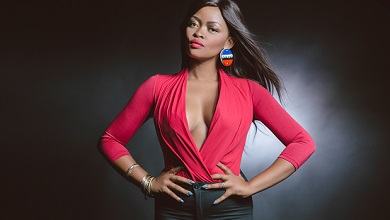 Growing up Ms Supa listened to rappers like Foxy Brown, who made her realise
that women can be emcees too. (Image supplied)
Growing up Ms Supa listened to rappers like Foxy Brown, who made her realise
that women can be emcees too. (Image supplied)
Where did you grew up?
Yugen Blakrok: I grew up in Queenstown in the Eastern
Cape.
Ms Supa: I hail from Benoni.
How long have you been in the hip hop industry?
Yugen Blakrok: I started rapping in the early 2000s.
Ms Supa: I started rapping in 1996. I only actively pursued
it from 2003, after I moved to Pretoria.
What
made you decide to become a rapper [emcee]?
Yugen Blakrok: The love for poetry and language. Also, I
had two left feet and I realised I'd never make it break-dancing.
Ms Supa: I had always loved rap music. I did not even
consider it a possibility that females could do it. I had an 'aha moment' when I
heard a song by Foxy Brown called Get You Home on radio. My first thought then
was: "Oh, girls can do it too."
Insert music video of Yugen Blakrok.
What is your culture, and how do you express or showcase it within your
craft?
Yugen Blakrok: I'm Xhosa. My culture and heritage is
embedded in the lyrics. The influence of where I was born, the traditions I've learnt
and the rhythm in my native tongue permeates everything I do, in and out of the
creative spectrum.
Ms Supa: I am a Zulu girl. My punchlines and metaphors
are mostly South African. I talk
about things that a South African would understand.
Insert music video of Ms Supa.
Do you, as a woman in the hip hop industry, feel equal to the men?
Yugen Blakrok: When it comes to skills, yes I do.
Ms Supa: I think women throughout history have always
had a hard time getting recognition for a job well done or being taken seriously.
This happens in corporate, in the home and definitely in the hip hop industry.
Because the founders of hip hop were male, so women had to work twice as hard to
prove they are just as good. We are not allowed to drop the ball. So we are equal in
skill, but the market is yet to see us in the same light.
Do you get the question "what's it like being a woman emcee" a lot?
Yugen Blakrok: Now, definitely not as much as I used to.
Ms Supa: Yes – a lot, especially during Women's Month.
How do
you feel about that question?
Yugen Blakrok: I find it hard to engage with and a bit dull.
There are far more interesting questions one could ask.
Ms Supa: I have been in the industry for over a decade. So
for me that question gets tired because it shows the lack of research an interviewer
did on you before an interview. There are so many other facets of my music and
being that don't get explored and shown to the public that they also have the view
that female rappers are still feeling marginalised.
I would also love to have an interview with AKA for example and ask him 'What
is it like being a male rapper' and see if he humours me with a solid answer.
The question lacks any depth or respect for the artist.
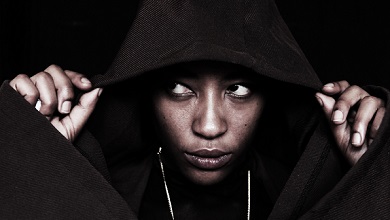 Yugen Blakrok says her hip hop influences include Wu-Tang Clan, The
Fugees, Lauren Hill, Nas and Organized
Konfushion. (Image supplied)
Yugen Blakrok says her hip hop influences include Wu-Tang Clan, The
Fugees, Lauren Hill, Nas and Organized
Konfushion. (Image supplied)
What keeps you motivated or inspired?
Yugen Blakrok: My people at Iapetus Records always push
me to do more. I'm inspired by my sisters, my friends and opportunities that show
themselves right when they're needed. It's not always easy staying motivated so I
often go out of my way to find things that will create that spark. Good friendships
are the best.
Ms Supa: Music and my family.
What is your most memorable moment as an emcee?
Yugen Blakrok: I have a few - rapping for Chuck D when
Public Enemy were in South Africa, opening for Sage Francis, and playing at Hip
Hop Kemp this year.
Ms Supa: It definitely has to be [that I was the first woman
emcee on] hip hop magazine
Hype's cover. It really set the tone and
made my career memorable to others. I had the pleasure of featuring on HHP's
Dumela album on
a song called Mmago Rrago. I have also shared the stage and
songs with some great artists in South Africa such as Amu, Ramesh, Reason, Black
Lez and many others.
Would you like to use this article in your publication or on your website?
See Using SouthAfrica.info
material





 Ms Supa, the first woman emcee to appear on the local hip hop magazine, Hype, believes that women rappers should be treated as equal to their male counterparts. (Image supplied)