|
Diamonds and British consolidation
The Cape Colony was granted representative legislature in 1853 and self-government in 1872. Between these two dates a dramatic new element was introduced to the economic, and consequently political, balance - the discovery of diamonds and subsequent establishment of Kimberley. For the first time it became evident that there was wealth for the taking in the subcontinent. Rival claims by the Orange Free State, the ZAR and Nicholas Waterboer, chief of the West Griquas - a community of mixed race - were defeated and the area was incorporated into the Cape Colony in 1880. As British territory, it was a perfect proving ground for the young Cecil John Rhodes, one of the many thousands to be attracted by the diggings, and one who made his fortune there.
The colony had taken tentative steps towards political equality among the races. The franchise was based on economic qualifications, non-racial in theory but excluding the vast majority of African and coloured people in practice. Among
those who did qualify many became politically active across colour lines. The promise existed of progress towards full political inclusion of the population.
The Colony of Natal, however, was developing along somewhat different lines, the size of the Zulu nation assuming threatening proportions to the colonists. Reserves were created under traditional African law for refugees from Zulu might; outside those reserves British law held sway. As almost all blacks were deemed to fall under the rule of the chiefs in the reserves, almost none had any chance of political rights outside their borders.
Economically, Natal had the advantage of being ideal for the cultivation of sugar cane. The consequent labour requirements led to the importation of indentured labourers from India, many of whom - in spite of discrimination - remained in the country after their contracts had expired: the forebears of today's significant and influential Indian population.
The late 19th century was
an area of aggressive colonial expansion, and the Zulus were bound to come under pressure. But they were not to prove easy pickings. Under their king Cetshwayo, they delivered resounding proof at Isandhlwana in 1879 that the British army was not invincible. However, they were defeated in the following year, leading to Zululand eventually being incorporated into Natal in 1897.
| |
 |
|
|
|
|
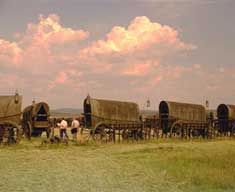
A monument commemorating the Battle of Blood River
Courtesy: SA Tourism |
|
|

|
|
|
|
The Castle in Cape Town
Courtesy: SA Tourism |
|
|