Nepad plan to link African schools
Thapelo Sakoana
26 October 2005
At least 600 000 schools in Africa are to be connected via a satellite network in a bid to help schools produce maths and science whizz-kids.
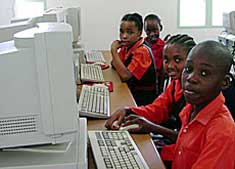
This is thanks to the e-School initiative of the New Partnership for Africa's Development (Nepad), aimed at equipping all African primary and secondary schools with information technology apparatus such as computers, and to connect them to the internet.
Addressing the Youth into Science Strategy conference on Tuesday, Professor Peter Kinyanjui of the Nepad e-Africa Commission said the first phase would be rolled out in the first 20 countries to sign the African Peer Review Mechanism agreement.
They include South Africa, Mozambique, Ethiopia, Mauritius, Uganda, Mali and Cameroon.
The two-day conference is being attended by about 300 representatives from science councils and centres, government departments, non-governmental organisations and universities. Delegates are exploring ways to rekindle
the interest of young people in maths and science.
Kinyanjui told delegates that the e-School initiative was aimed at bridging the digital and resource divides between the continent and the rest of the world.
"No one will come and develop Africa for us. Although we shall accept partners from other parts of the world, we must pull it off ourselves," he said.
"The objective is to also ensure that African countries are connected to a broadband fibre-optic network that is in turn being linked to the world," he added.
Kinyanjui said this drive would also ensure the development of human resources, business and entrepreneurship skills as well as local content in the field of science and technology.
"For this to work, you need skills, particularly among young people, to ensure sustainability and a bright future."
For this project to succeed, he said, there was a need for the African Diaspora to use the expertise gained in other continents for the
development of their own.
Some experts were already ploughing back into the continent through the establishment of the Friends of the Nepad e-Schools programme.
"Somebody in rural areas with these skills should set up a support network to service these schools. This is an opportunity for people to take advantage of," Kinyanjui said.
Source: BuaNews


|