Improved growth outlook for SA
7 March 2007
The Bureau of Economic Research's (BER) latest analysis of South Africa's economy indicates the growth outlook has improved over the past few months, with a smaller current account deficit and lesser inflationary pressures, but risks still remain.
In a statement issued last Wednesday, BER economist Hugo Pienaar said: "Compared with the BER's previous forecast, we are in a bit of a goldilocks scenario: the current account, rand exchange rate and inflation seem to be less of a concern, while interest rates are likely to remain unchanged for the time being. These trends ensure that economic growth remains robust."
He pointed out that lower oil prices had led to a decline in petrol prices since last September, while there are encouraging signs that, at least at the producer level, food prices may have peaked.
As a result, the BER no longer expects CPIX to breach the 6% inflation target, but will reach close to the mark during the first half of this year. It projects CPIX to average 5.4% this year, up from last year's 4.6%, before slowing to 5.1% in 2008.
The Bureau did not expect the South African Reserve Bank (SARB) to leave interest rates unchanged, though it agrees an improved inflation outlook may justify the monetary policy committee decision.
However, Pienaar pointed out to the following risks "that may cloud this fairly optimistic view": After dropping below US$50 per barrel, the oil price is back on the rise, meaning further petrol price increases. In addition, local and international maize prices have started to rise, with the South African Futures Exchange white maize price at a four-year peak, which could result in higher food prices.
"Perhaps the most crucial inflation and interest rate threat is if the consumer demand does not slow as expected. In such an environment, the SARB may be forced to resume hiking interest rates," the statement adds.
Improved exports and reduced demand for imports should lead to the current account deficit narrowing to 5.6% of GDP in 2007 against an estimated 5.1% in 2006. However, the deficit is predicted to widen again in 2008 to 5.5% of GDP as imports rebound.
Though US dollar weakness and a higher gold price have supported the rand, the BER points to possible interest rate hikes in Europe and Japan which would make South African assets less attractive to foreign investors.
'Mild' global slowdown
The BER states that there continues to be widespread consensus among analysts worldwide that the global economy is set for a fairly mild slowdown in 2007, pointing to the slump in the US housing market as "significant threat".
On the other hand, the Bureau expects economic growth in China to remain around the 10% mark, as foreigners continue to find value in assets there.
Despite South African consumers proving resilient against recent interest rate hikes so far, the BER expects consumer spending to ease this year as the higher interest rates take effect.
"Because the consumer is the mainstay of the SA economy, the spending slowdown should result in growth moderation. However, strong infrastructure investment and hopefully an improved expert performance should shield the economy," the report states.
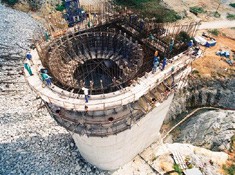
The BER forecasts economic growth to remain around 4.5% during 2007 and 2008, with the growth being more balanced over the next few years, as opposed to the consumer driven expansion experienced since 2003/04.
Other risks that could affect economic growth include higher oil prices and softer world economic growth. However, the biggest risk is if the rand does not weaken this year as expected, but rather moves back towards the R6.50/$ due to dollar weakness, higher commodity prices and strong capital inflows.
Though a stronger rand improves the inflation and interest rate outlook, the major concern is that a strong rand will lead to an increased current account deficit.
"Under such conditions SA will continue on the consumer driven growth path, which we feel is unsustainable in the long run. Production capacity needs to be fostered otherwise there will not be much industry left to benefit from the infrastructure investment surge," the report states.
SouthAfrica.info reporter
|