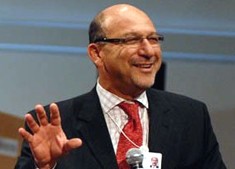
Cut out the frills: Manuel
Shaun Benton
1 November 2007While the South African economy remains on track for higher growth, the government must focus more on increased productivity and efficient use of resources if the country is to halve unemployment and poverty by 2014, says Finance Minister Trevor Manuel.
Delivering the 2007 Medium Term Budget Policy Statement to Parliament in Cape Town on Tuesday, Manuel said that despite an addition R81.4-billion being added to the state's coffers for the year, the government had to take measures to reduce unnecessary expenditure or spending not in line with a measured and efficient outcome.
He said that the move towards wiser spending would be led by national government departments, sending a "strong message" to other government structures to improve their efficiency. In addition, next year's budget would shed more light on measures to make more efficient use of resources.
For now, national government departments are to be asked to source savings of about R2.3-billion over the next three years.
The belt-tightening will involve "limiting spending on unnecessary entertainment, travel and hotel accommodation, misplaced branding and communication initiatives, poorly managed consultancy services and related frills".
The aim, according to the "mini-budget", is to "shift more resources to the frontline of service delivery."
Increased public spending
The 2008 Budget, Manuel said, would "place particular emphasis on improving the efficiency of public spending, partly by getting departments to report on their outputs in a transparent manner".
The focus will remain on allocating money to those programmes "which have the highest rate of social return", in other words, those programmes with the greatest impact on reducing poverty and unemployment over the long term.
The building of power plants, railway lines, port, laboratories and further education and training facilities will remain a central focus of public spending, as these will contribute to "higher productivity in the long term".
While huge investments are currently under way in infrastructure expansion, particularly in power generation and transport and freight operations, the Treasury envisages a gradual slowdown in the growth of public spending over the next three years.
The rate of growth in public spending, which has been much far higher than the rate of growth in gross domestic product, is expected to slow from about 9% a year to about 6.4% a year.
This is still higher than the rate of overall growth of the economy, where gross domestic product growth remains strong and is projected at 4.9% for this year, with the most robust sectors being construction, manufacturing and services.
Manuel cautioned, however, that global risks to the economy remained on the horizon, telling reporters that this called for the introduction of the concept of a "structural budget balance".
"Simply put, when economic conditions are good as they are now, we must invest and save in a manner that allows us to maintain public spending and societal welfare when economic conditions turn less favourable, as they inevitably will."
Source: BuaNews