Securing unity, investment in SA
Frances Williams
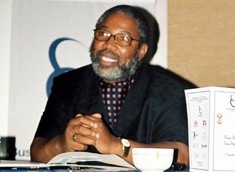
20 June 2007Addressing investors and expatriates in London recently, Safety and Security Minister Charles Nqakula spoke candidly of the challenges facing South Africa's police, and outlined the government's plans to make SA safe for all who visit, invest or live in the country.
|
When one talks about a better life for everyone in South Africa, Nqakula said, "It means that all those who were disadvantaged before must enjoy a better life and richer South Africans must be given the freedom to enjoy being South Africans."
Merging the interests of all South Africans meant creating a country where everyone felt a sense of belonging. "In South Africa there will always be democracy, always be respect for human rights, and everyone will have access to justice and a better life."
'The miracle is still young'
While not minimising the country's challenges, Nqakula pointed out that although South Africa is seen as a giant in Africa, the new South Africa is only 13 years old. "As a democracy, we are the new kid on the block," he said.
"But South Africa's perception of being a miracle gives rise to expectations that the country can wave a wand and everything will be a miracle."
The South African Police Service, established in 1995, was the result of a merger between 11 disparate forces from the apartheid era, each with their own levels of training and attitudes to policing.
The first five years were focused on creating a unified force with a shared understanding; no easy feat, as it entailed bringing together guerillas who had struggled against apartheid with the very forces they had been fighting. According to Nqakula, the reality is that South Africa's modern police service is only seven years old.
Nqakula is not blasé about crime in the country. "Crime levels are high in South Africa. Since 1994, they have been coming down, but they are high. Some of these crimes are accompanied by extraordinary violence."
However, public perception of the crime situation in the country is not always accurate, he argued.
'Social' crime vs
organised crime
In terms of the types of crime that take place in the country, Nqakula spoke of two categories: "social" crime and organised crime. Those under the category of "social" - 80% of the serious crimes reported, according to a recent survey - involve people from within the same social environment and are frequently fuelled by drugs and alcohol.
Reducing this type of crime, far harder to police than the organised variety, needs the support of communities, and one of the minister's objectives is creating a new type of community policing where community members work in partnership with the security services in identifying crime.
"We have been trying to deal with the mindset," he said. "We have a partnership now with religious leaders, and we want people to participate in a change of mindset programme - the only way that social crime can be dealt with."
The programme will involve creating community policing forums, training police reservists in the community, and working with them to determine key priorities for security and review outcomes.
"We believe that where the system is working fully, crime will be reduced considerably in South Africa," he said.
Reservists will help to increase the visibility of police, while mounted roadblocks, 24-hour patrols and cordon-and-search operations will all serve to bring down street crime.
Organised crime, which represents about 20% of crime reported in SA, is an area where the police can and are being proactive, Nqakula said, and eliminating informal settlements and squatter camps is a priority.
"The informal settlements are a haven for criminals and undocumented and unemployed illegals, some of whom were in the security forces or were guerillas and therefore know how to use weapons.
"We have introduced and are using technology to maximum effect on organised crime." The new forensic technology available to the police, he added, has also helped in tracking and arresting suspects.
Building management capacity
In 2006, South Africa's security services established, for the first time, a partnership with big business to tackle organised crime and armed robbery. This partnership has already borne fruit in crime prevention, as well as resulted in the arrest of more than 9 000 "hardened" criminals involved in over 17 000 criminal cases.
South Africa's commitment to tackling crime is evident through the allocation of financial resources to Nqakula's ministry. The budget allocated to his portfolio will increase from R35-billion to R42-billion over the next three years. "No other department has these resources, which shows how keen we are to address this issue," Nqakula said.
A key challenge for Nqakula is building management capacity and effective management, control and command within the police service. Earlier in the year, the minister announced that an evaluation of the country's police stations had revealed that while a good number of the station commissioners were excellent police officers, many were poor managers.
"The need for better management and performance demanded a review of the organisational structure of the police," he said. As a result, local stations have been empowered with more human and material resources, while a management and performance tool has been developed to track how stations are managed and policing resources and service delivered.
The new system has revealed that 84% of all serious crimes take place within 169 out of over 1 000 police station areas. The resulting changes in police station staff and management, as well as an increased police presence and 10 000 new recruits each year, will drastically reduce crime, the minister believes.
In addition, the introduction of a new parole system and community service to reduce the incarceration of petty criminals will increase prison space for hardened criminals.
"We have always believed that we need to create conditions for peace and stability, not just for South Africa but for Africa," Nqakula said.
With the 2010 World Cup shining a spotlight on South Africa, and with the country's desire to encourage its citizens overseas to return home, Nqakula and his team are determined to ensure that South Africa is a country that is safe and secure for both investment and social progress.
Edited version of an article first published in Reconnect Africa, an online careers, business and people management magazine for African professionals around the world.