Well-oiled tax regimes
12 November 2004
New research shows that tax collection in sub-Saharan Africa is becoming more efficient. A study of 13 sub-Saharan African countries - including South Africa - shows an increase in government revenue, despite tax cuts.
The study, conducted by South African banking group Absa, found that revenue authorities have been successful in broadening the tax base and improving tax collection efficiency.
Eight countries surveyed in the study - Ghana, Kenya, Malawi, Rwanda, Tanzania, Uganda and Zambia and South Africa - have established semi-autonomous revenue authorities, with other west African countries as well as Mauritius likely to follow this trend.
South Africa has in recent years boosted its tax revenue significantly by streamlining its collection processes - resulting in knock-on tax breaks for lower income earners.
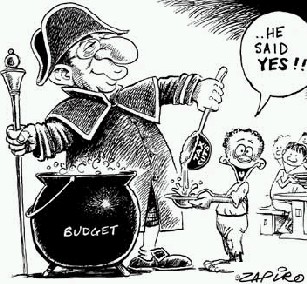 Finance Minister Trevor Manuel as
depicted by famous political cartoonist Zapiro in 2003.
Finance Minister Trevor Manuel as
depicted by famous political cartoonist Zapiro in 2003.
The Absa study was based on data from 1987 and 2002. Corporate tax was reduced in 12 of the 13 countries surveyed, while the top marginal income tax rate was reduced in 11 countries.
The study shows that the typical individual and corporate tax rate is 30% - found in Tanzania, Kenya, Uganda, Zambia, Zimbabwe, Tanzania and South Africa.
According to the report, Nigeria has cut its top marginal income tax rate on individuals from 70% to 25% and Botswana its corporate tax rate from 35% to 15%. Ghana has cut its top marginal income rates from 55% to 25%.
The study found that tax administration still remains a challenge in sub-Saharan Africa. However, the successful introduction of Value-Added Tax, and the rise in revenue collection despite tax cuts, suggest overall improvements.
SouthAfrica.info reporter