Museum for Mapungubwe
16 February 2004
The ancient archaeological site of Mapungubwe in Limpopo will soon have a museum detailing the rich culture of the people who once lived in a major African trading post pre-dating Great Zimbabwe.
The museum will display artefacts showing how African people lived more than 1 000 years ago, and will form part of a cultural interpretative centre whose staff will narrate the history of Mapungubwe to visitors.
The hilltop citadel of Mapungubwe - which translates as "Hill of the Jackal" - was first excavated in the 1930s and has provided evidence of a broader African civilisation that predates the arrival of Europeans by several centuries.
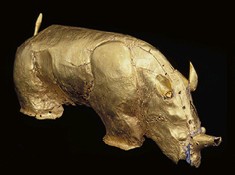
Mapungubwe is believed to be the first capital of the Great Zimbabwe Empire, and is home to some of southern Africa's oldest gold artefacts - including the famous golden rhino statuette - excavated from 23 royal graves.
Apartheid authorities suppressed information about the finds and handed over
management of the site to the military in an attempt to reinforce government propaganda that indigenous Africans were "uncivilised" before colonisation.
The R45-million project to develop the site into a tourism destination is expected to be completed by March. The project includes wider infrastructure development within the Vhembe Dongola National Park, which incorporates Mapungubwe.
SouthAfrica.info reporter


|