Cape Flora on World Heritage List
14 July 2004
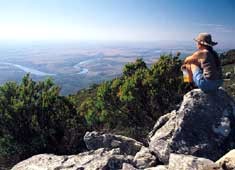
The Cape Floral Region - comprising eight protected areas stretching from the Cape Peninsula to the Eastern Cape - was the sixth South African site to be inscribed on the World Heritage List of the United Nations Educational, Scientific and Cultural Organisation (Unesco). The country has a total of seven international heritage sites.
World Heritage in South Africa
Did you know that the Vredefort Dome is the largest and oldest visible meteor impact crater in the world? Or that the Drakensberg has Africa's richest concentration of rock art? SA is home to seven Unesco World Heritage sites, places of "outstanding value to humanity" 
|
|
Unesco's World Heritage Committee declared the 553 000 hectare Cape Floral Region to be "outstanding universal significance to humanity", describing it as "one of the richest areas for plants in the world".
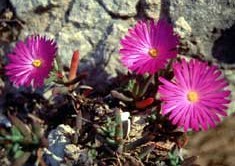
The Cape Floral Region "represents less than 0.5% of the area of Africa, but is home to nearly 20% of the continent's flora," Unesco said in a statement. "Its plant species diversity, density and endemism are among the highest worldwide, and it has been identified as one of the world's 18 biodiversity hot-spots.
"The site displays outstanding ecological and biological processes associated with the Fynbos vegetation, which is unique to the Cape Floral Region," Unesco added.
"Unique plant reproductive strategies, adaptive to fire, patterns of seed dispersal by insects, as well as patterns of endemism and adaptive
radiation found in the flora, are of outstanding value to science."
Eight protected areas
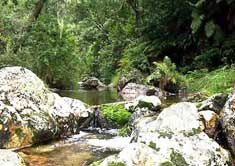
The "serial" heritage site comprises eight protected areas considered to be the most important examples of the Cape foral kingdom: Table Mountain, De Hoop Nature Reserve, the Boland mountain complex, the Groot Winterhoek wilderness area, the Swartberg mountains, the Boosmansbos wilderness area, the Cederberg wilderness area, and Baviaanskloof, which straddles the Western and Eastern Cape boundary.
Kirstenbosch Botanical Garden on the slopes of Table Mountain is included in the site, the first time a botanical garden has been included in one of Unesco's world heritage sites.
The region follows the Cape fold belt of mountains, the Cedarberg and Hottentots Holland mountains, then cuts through the Langeberg, Outeniquas, Tsitsikamma, Swartberg and Zuurberg mountains, encompassing key sections of the Cape floral kingdom, the smallest and richest of the
world's six floral kingdoms - and the only one to be contained within one country.
Cape floral kingdom
South Africa has the third-highest level of biodiversity in the world, thanks in no small part to the Cape floral kingdom. The Table Mountain National Park alone has more plant species within its 22 000 hectares than the whole British Isles or New Zealand.
A stretch of land and sea spanning 90 000 square kilometres, or 0.05% of the earth's land area, the Cape floral kingdom contains roughly 3% of the world's plant species - at about 456 species per 1 000km2.
Of the 9 600 species of vascular plants (plants with vessels for bearing sap) found in the Cape floral kingdom, about 70% are endemic, ie occur nowhere else on earth.
The areas's freshwater and marine environments are similarly unique, with plants and animals adapted to highly specialised environments.
And when it comes to fauna, the kingdom boasts 11 000
marine animal species, 3 500 of which are endemic, and 560 vertebrate species, including 142 reptile species of which 27 are endemic.
South Africa's other World Heritage Sites are Robben Island, the Greater St Lucia Wetland Park, Sterkfontein Cradle of Mankind, the uKhahlamba-Drakensberg Park, the Mapungubwe Cultural Landscape and the Vredefort Dome.
There are 812 World Heritage sites in the world, in 137 countries. Africa has 65 sites.
SouthAfrica.info reporter


|