Commission on Gender Equality
The Commission on Gender Equality is one of six state institutions set up in terms of the Constitution to promote democracy and a culture of human rights in the country.
The Commission’s role is to advance gender equality in all spheres of society and make recommendations on any legislation affecting the status of women.
The Commission aims to transform society by “exposing gender discrimination in laws, policies and practices; advocating changes in sexist attitudes and gender stereotypes; and instilling respect for women’s rights as human rights”.
Although the Commission acts in the interests of women generally, it pays particular attention to the most disadvantaged women – those living in rural and peri-urban areas, on farms, in domestic work.
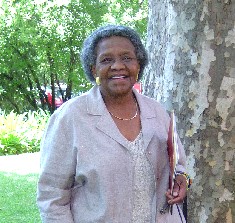
The chairperson of the Commission is nominated by the President. In October 2002, Joyce Piliso-Seroke was reappointed as the chairperson of the Commission until 2007, having served as chairperson of the commission
since 2000.
There must be no less than seven and no more than 11 Commissioners, and between two and seven of these must be full-time, the rest part-time. The Commissioners are nominated by the public and after being endorsed by a parliamentary committee, are then appointed by the President for a term of up to five years.
The Commission’s functions are to:
- Monitor all organs of society to ensure that gender equality is safeguarded and promoted.
- Assess all legislation from a gender perspective.
- Commission research and make recommendations to Parliament and other authorities.
- Educate and inform the public.
- Investigate complaints on gender-related issues.
- Monitor South Africa’s progress towards gender equality in relation to international norms.
The Commission on Gender Equality co-operates with other institutions set up under the Consitution to promote human rights and democracy, including the South African Human Rights
Commission and the Public Protector.
It has close partnerships with other government-appointed agencies such as the Youth Commission, Independent Communications Authority of South Africa, and the Public Service Commission. It also works closely with government, particularly the Department of Justice, Office on the Status of Women, and Parliament.
Complaining to the Commission
The Commission investigates gender-related complaints from the public. Those falling outside its mandate are referred to other organisations. Complaints are dealt with confidentially and the identity of any complainant is protected by the Commission.
For information on how to lay a complaint, see the box on the right above.
The Commission lacks capacity to deal timeously with the many complaints that flood its offices. However, it will do its utmost to respond or refer complaints to another relevant agency.
Most of the complaints it receives concern
domestic violence. The Commission’s intervention in such cases involves helping the complainant to file a restraining order.
The Commission has the power to supoena a person who fails to co-operate to attend a hearing - for example, a maintenance officer who is not complying with the law in assisting a women with a maintenance order.
Gender equality 'starts at home'
Commission chairperson Joyce Piliso-Seroke has fought for the liberation of women for most of her 69 years. In 1976, she was jailed at the old Women’s Gaol in Braamfontein, Johannesburg.
South Africa still has a long way to go in becoming gender-sensitive, Piliso-Seroke says, adding that the Commission is particularly determined to restore the pride and dignity of poor rural women and improve their access to information about their basic human rights.
Another of the Commission's key objectives, she says, is to take the promotion of women’s rights into South Africa’s
echelons of power: the chambers of local, provincial and national government. “We must challenge discrimination in governance and see where the power of decision-making lies, particularly in local government where there are so few female councillors.”
Gender equality starts at home, says Piliso-Seroke. “It’s how we as parents promote gender equality that matters. I’m calling on mothers, fathers and siblings to teach each other how to value girls and women, and to recognise them as human beings.
"In some instances we have given up on men, but we know we can reach young people to make a difference.”


|