SA plans for sustainable growth
Shaun Benton
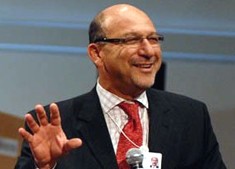
6 November 2007A number of risks on the international horizon have contributed to a moderate slowdown in South Africa's projected economic growth rate, with the outlook "somewhat less positive" than it was in February, says Finance Minister Trevor Manuel.
Presenting his Medium Term Budget Policy Statement to Parliament in Cape Town last week, Finance Minister Trevor Manuel said that financial crises in developed countries' markets, global imbalances, high food and oil prices internationally, and slowing growth in the United States and other developed countries served to "cloud the sky".
All these factors underlined the need to build up the country's protective cushion against possible future shocks, he said.
While times have been good for South Africa, with high prices globally for the country's many metals and minerals, as well low interest rates - at least until inflation began to bare its teeth earlier this year - this is a cyclical pattern.
GDP growth projections
Despite the potential risks, however, the National Treasury still projects that South Africa's economy will grow at an average 5% a year for the next three years, although "the pace of economic expansion is expected to cool somewhat in 2008".
Manuel said the government envisages a 0.1% downwards revision in gross domestic product (GDP) growth for this year, bringing projected GDP growth to 4.9% as opposed to the 5% previously envisaged.
For next year, the downward revision in growth expansion is 0.7%, Manuel said, placing projected GDP growth at around 4.5% for 2008, then 4.8% in 2009 and 5.3% in 2010.
South Africa's GDP grew by 4.5% in the second quarter of 2007, making it 35 consecutive quarters of economic growth since 1998, the longest upswing in the country's history
This expansion has strengthened the country's job creation and increased fiscal revenue, contributing to rising living standards.
Planning for leaner times ahead
While the Treasury envisages continued high commodity prices over the next few years, it realises that favourable conditions will not last forever.
Planning for sustainable growth is being done by a "sharpening" of macro-economic tools while maintaining spending on human capital and skills development, which will enhance capacity over the medium to long term, Manuel told Parliament last week.
"We will continue to place education and skills development at the top of the budget priority list," he said.
The need for consistent expenditure on matters that will sustain the country underlines this year's introduction of a structural budget balance. Also known as a cyclically adjusted budget balance, this will allow the government to protect spending on programmes vital to the country's development even if economic conditions worsen, the finance minister explained.
Such an adjusted budget balance is based on an understanding of the potential or longer-term trends of an economy, and then takes into account over-performance or under-performance as a result of temporary circumstances.
The critical issue is one of ensuring sustainability over time, through long-term measures to enhance the economy's potential and being aware of when an economy seems "richer" than it really is.
The additional revenue that comes from when the cycle is positive should be spent on things that raise the country's ability to grow faster in the long term, things such as infrastructure, education and institutional capacity, Manuel said.
For the benefit of future generations, some of this revenue should also be used to pay off state debt and save for the future.
Posting a budget surplus
The posting of a budget surplus is central to these purposes and counts among the chief tools used for cushioning any potential blows to the country's
economy.
The 2007 medium term budget proposes surpluses of about 0.6% of GDP each year for the next three years. This is on top of last year's surplus of 0.6% of GDP -which was a historic occasion, given that the previous budget surplus was posted in 1981.
To put this into perspective: a budget surplus of 0.5% projected for 2010/11 would turn into a deficit of about 1% of GDP if economic conditions were suddenly to worsen and the positive gains from cyclical revenue were removed.
Using windfall revenues from favourable economic conditions to invest in physical infrastructure and human development would yield results "for decades to come," Manuel said.
"We need to welcome and take advantage of the opportunities of global growth, but we also need to distinguish temporary prosperity from structural progress. We need to ensure that windfall gains are wisely invested and surplus resources are set aside for when markets turn against us in times ahead."
Budget revenue revised upwards
Expected budget revenue for 2007/08 has been revised upwards, with an overall increase of R8.5-billion putting the figure now at R553.1-billion. This shows a surplus of R10.8-billion, as R542.4-billion is set for expenditure.
This puts budget revenue for this financial year at more than a quarter of the country's gross domestic product for the year, of slightly over R2-trillion.
This is to cushion against an economic downturn and to allow the government to continue to spend on the vital areas of development.
An additional R81.4-billion goes into the "envelope" of this year's medium term budget, adding to the more than R1.7-trillion already budgeted for over the next three years.
In line with the Treasury's shift of resources to the "coal face" of service delivery, over R50-billion of this additional money is to go to municipalities and provincial departments.
Higher than expected
inflation
Additional money also goes towards compensating social grant recipients for higher than expected inflation. About 12-million South Africans rely on social grants.
Inflation, which has been standing outside the SA Reserve Bank's target range of between 3 and 6 percent since April, remains a concern. This is driven by higher food prices and the second-round effects from higher wage settlements and the rising world oil price.
Oil prices are beginning to touch US$100 a barrel, which was a scenario unheard of over three years ago. An increase of about 23% in the past two months alone has been noted.
A recent increase in South Africa's main measure of inflation, the consumer price index (CPIX), saw it reach 6.7%, leading South Africa's central bank, the Reserve Bank, to up interest rates.
Fixed investment boom
In brighter news from the 2007 medium term budget, a key target of the Accelerated and Shared
Growth Initiative for SA (Asgi-SA) of seeing fixed investment in the economy rise to 25% is now "imminently achievable". This will lead to job creation and higher productive capacity.
Fixed investment grew rapidly in the first six months of this year, reaching 20.7% of GDP, just a few points short of Asgi-SA's target of 25% by 2014. This is a major climb from an investment level of about 15% of GDP in 2002, and a big boost for Asgi-SA.
South Africa's high household debt, which rose to the dangerous level of 76.6%, is also expected to drop and reach more sustainable levels. This was helped largely by the introduction of the National Credit Act in June.
Foreign capital inflows
Healthy foreign capital inflows have strengthened the economy too, ending fears of a key weakness in South Africa's economic structure being the difference between imports and exports.
Measured by the current account, increased exports saw the export deficit of 6.2% in early 2006 widen to 6.7% by early 2007, leading to concerns over whether South Africa would have the foreign exchange reserves to pay for increased imports going forward.
However, South Africa's foreign reserves were sitting at the not-too-uncomfortable level of US$30.5-billion at the end of September 2007. This confidence to weather an import storm was hugely boosted by the massive deal announced the week before last by China's largest bank.
The Industrial and Commercial Bank of China made a R37-billion investment in South Africa's Standard Bank. Manuel said the deal had boosted international confidence not only in South Africa's economy but in future prospects for the entire continent too.
He said it signalled a new place for Africa in the changing patterns of trade and finance flows of the 21st century.
Source: BuaNews