TOURISM
SA tourism defies gravity
Philippa Garson
22 July 2002
South Africa has climbed from 52nd most popular tourist destination in the world a decade ago to its current position of 25th, according to a World Trade Organisation survey. And unlike many countries battling to revive their tourism industry in the post-September 11 climate of fear and instability, South Africa, regarded as a comparatively safe haven, has continued to experience growth.
In January this year, 14.5% more European tourists visited the country compared with the same period last year. And 10% more foreigners visited South Africa in February compared with the same month last year. During 2001, the tourism industry generated R34.3-billion from foreign tourists.
Most of South Africa’s foreign tourists hail from the United Kingdom, Germany, United States, Netherlands and France (in that order). But visitors from Africa, particularly the southern African region, are beginning to visit the country in growing numbers.
Currently,
tourism generates 4.5% of GDP, a figure that is expected to climb to 9% by 2014, according to John Morris of Trade and Investment South Africa (Tisa). During this period a million new jobs are likely to be created.
It is no surprise then that the tourism industry has been earmarked as one of the country’s five economic growth areas. Tourism is being seen as a major player in the push for sustainable development and job creation, and is regarded as a core element of the New Partnership for Africa’s Development (Nepad).
Spatial Development Initiatives
The Department of Environment and Tourism is developing several major integrated tourist destinations or Spatial Development Initiatives (SDIs). These SDIs are expected to attract foreign and local investment in tourism and other economic ventures – investment which is environmentally sound, which preserves nature, creates jobs and furthers black empowerment.
The most-developed SDI is
the Lubombo initiative, which incorporates the Greater St Lucia Wetland Park. Others include the Coast-to-Coast initiative (modelled along the United State’s Route 66) and the Maluti-Drakensberg initiative.
Julian Sturgeon, from the Department of Environmental Affairs and Tourism, says the SDIs are designed not only to attract responsible investment but also to function as “one-stop shops” for investors. All the preliminary work is completed before the opportunities are marketed to the investor: environmental impact assessments, identifying tourism products required, and securing and providing finance for local black empowerment partners.
The Greater St Lucia Wetlands Park, set to create 1 200 direct jobs, has already attracted scores of foreign investors, with almost 100 bids having met the required criteria.
Foreign investors in tourism are taking the country seriously, putting their money into ventures such as hotels, resorts, theme parks and game lodges.
Morris says a total of R87.1-million in foreign direct investment has been secured since April this year, and that a further R6-billion is in the pipeline. This excludes the R4-billion in domestic investments in tourism currently on Tisa’s books.
Morris says investors are “motivated primarily by South Africa’s competitive advantage in terms of its tourism offerings and the high growth rates in foreign arrivals.
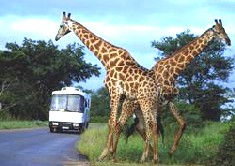
“Major attractions in South Africa include our scenic beauty, value for money, wildlife and many other elements. Additionally, our country’s diversity ensures that all visitors feel welcome, regardless of their race, language or religious affiliations.”
Investment projects in tourism with the most potential include eco-tourism, cultural tourism, adventure tourism, golf tourism and conference tourism.
Diversity of tourist experiences
South African Tourism CEO Cheryl Carolus says the organisation’s more focused,
customer-driven marketing strategy is designed to generate more awareness about the diversity of experiences the country has to offer tourists. “We’re emphasising the fact that South Africa has a First-World infrastructure and facilities as well as world-class tourism product and service offerings.”
A growing number of SA tourism products are now receiving international recognition: Five South African properties were ranked among the top 65 “Best in the World” in the US Conde Nast Traveler publication ‘2001 Reader’s Choice Awards’; Singita Game Reserve was ranked the world’s Best Hotel.
The country also won the Gold Journal Travel Award 2002 for the Best Sightseeing and Most Spectacular Golfing Destination in the World. The hosting of the World Summit on Sustainable Development in August 2002 and the 2003 Cricket World Cup have also boosted the country’s profile as a prime tourism and conference destination.
SA tourism 'defies
gravity'
Releasing tourism figures in Parliament on 9 May 2002, Environmental Affairs and Tourism Minister Valli Moosa said that 18 479 more tourists visited South Africa in January than in the same month last year.
“South Africa has defied gravity”, the Sunday Times quoted Moosa as saying. “Whereas tourism has collapsed in many countries, we have increased in all our markets around the world, especially Europe and Asia, except the United States.”
At the same time, a survey of 150 international tour operators – including some of the biggest operators in the US, Europe and Australia – found that visitors to South Africa feel safer than before the September 11 attacks.
Potchefstroom University’s Professor Melville Saayman, who conducted the survey, told the Sunday Times that more tourists were choosing South Africa after the attacks on the World Trade Center “as
perceptions changed about what constituted a safe destination”.
Travel patterns out of the US, for SA as for the rest of the world, have been dominated by September 11.
Pre-September 11, SA tourism growth out of the US was up by 2.31%, with 124 153 visitors up to the end of August compared to 121 344 in the same period in 2000. By the end of the year, however, US visitors had dropped to 170 611 compared with 174 728 in 2000, an overall decrease of 2.4%.
However, a report in the New York Times (7 May) notes that the number of US tourists to the country is on the increase again following the post-September 11 lows, with South Africa “increasingly viewed as a safe haven for people eager to glimpse the wildlife”.
“Attracted by inexpensive, first-class hotels and restaurants, luxurious game reserves and this country's warm welcome to tourists, growing numbers of Americans have been
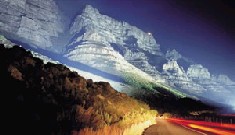
visiting ex-President Nelson Mandela's former house in Soweto, as well as viewing the lions and rhinoceroses in Kruger National Park and the cliffs of the Cape Peninsula, [US] travel agents say.”
World Markets Research Centre
According to World Tourism Organisation (WTO) figures, annual growth in tourist arrivals in Africa since 1995 has consistently outstripped the world average, and is expected to grow fourfold between 1995 and 2020.
The World Markets Research Centre, in its report In Focus 2002 – Africa, notes that Southern Africa (ie South Africa, Botswana, Namibia, Lesotho and Swaziland) “is expected to take the lion's share of the increase in visitors. According to WTO forecasts, the Southern Africa region could be looking at over 300% growth in tourist arrivals by 2020.
“Not surprisingly, South Africa is the
favourite choice for international tourists visiting the continent, taking over 22% of all international tourist arrivals to Africa”, the report continues.
“African countries that do well from tourism are those which are among the already most developed nations on the continent. High-spending tourists … expect to receive similar standards of accommodation and facilities to those they could reasonably expect at home.
“As a result, South Africa is a favoured destination, offering African wilderness and game, along with good roads, reliable electricity supplies and all without the threat of a coup d'état.”


|